No city in the world has a relationship with the World Cup like Mexico City.
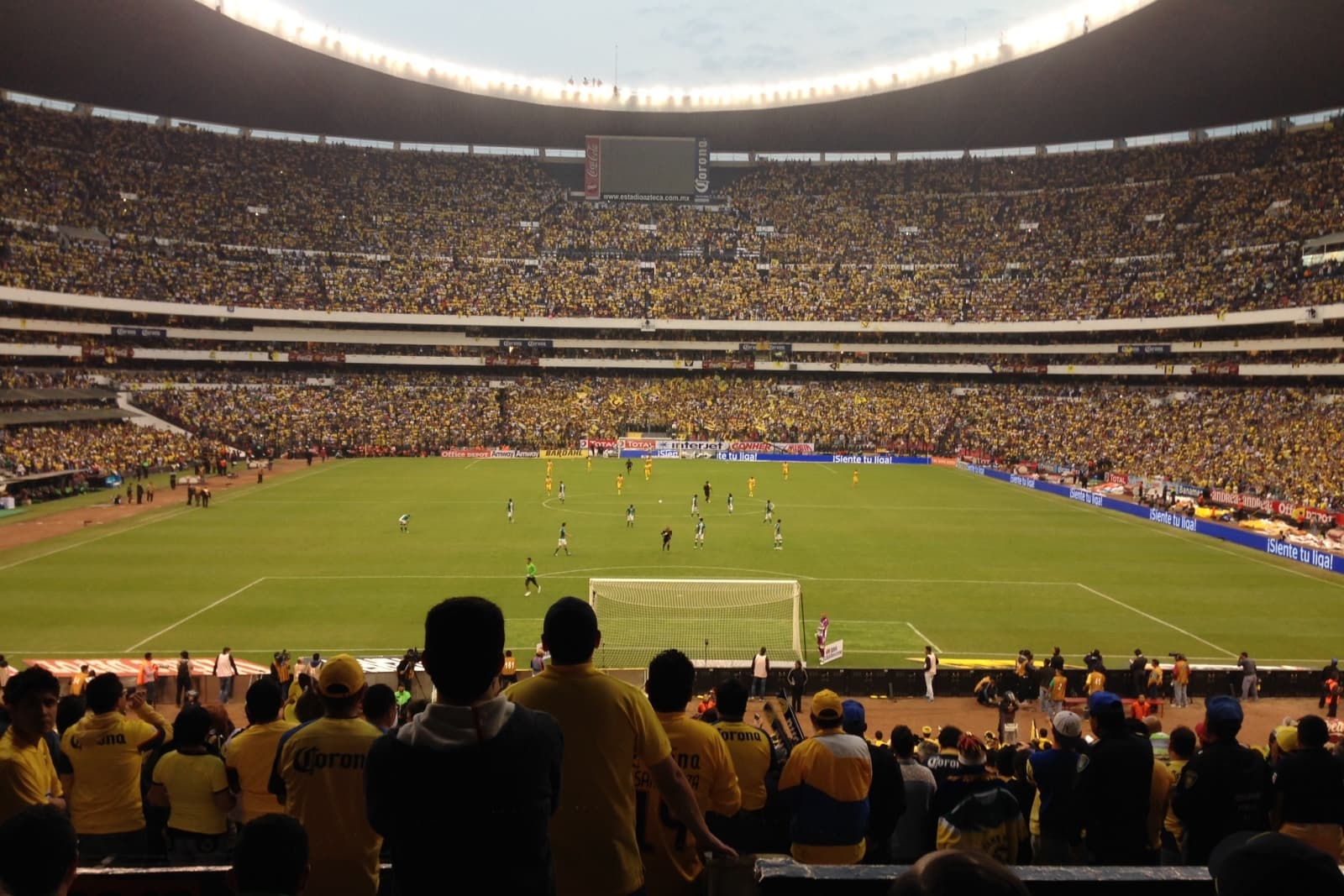
Pelé's greatest tournament - 1970. Maradona's Hand of God and Goal of the Century - 1986. Both played here, at Estadio Azteca, in a stadium that was already considered one of the most intimidating atmospheres in world football before either of those moments happened. Now, in 2026, the Azteca hosts the opening match of the entire tournament - Mexico vs. South Africa, June 11, the first whistle of the biggest World Cup in history.
Mexico City becomes the first city in history to host World Cup matches in three separate tournaments. It sits alongside Teotihuacán, Tenochtitlan, and the National Museum of Anthropology as proof of what this city has accumulated across centuries of storied history.
And beyond the history - The food. The street tacos that have people going back day after day because they cannot believe something this good costs this little. The coffee culture is better than anything in LA or NYC. The tree-lined boulevards of Roma and Condesa that make you want to stop walking and just exist for a moment. The people - warm, unhurried, who stop their cars for pedestrians and say good morning to strangers.
Add the Mexico World Cup to the list of reasons why you’ll love visiting Mexico. Without further ado, let's jump into your Mexico City World Cup 2026 Guide!
Why Mexico City for World Cup 2026

Mexico City, or CDMX (Ciudad de Mexico), is a city of 23 million people - one of the largest metropolitan areas on earth. And yet the neighborhoods where most visitors spend their time - Roma Norte, Condesa, Polanco, Coyoacán - are walkable, tree-lined, beautiful, and intimate in a way that contradicts the scale entirely.
The history here is literally beneath your feet. Mexico City was built on top of Tenochtitlan, the Aztec capital - and they are still excavating it. Ruins emerge from underneath downtown buildings. The Templo Mayor sits one block from the Zócalo. You can see the ruins of entire Mesoamerican cities, with some of the world's largest pyramids, within an hour of the city center.
Teotihuacán alone - a UNESCO World Heritage Site - draws over 4 million visitors annually. The National Museum of Anthropology receives over 2 million visitors per year and is considered among the finest museums in the world. CDMX has more than 150 museums - one of the highest concentrations of any city in the world. This is not the sanitized museum version of ancient history - it is the living, continuing presence of it, under every street.
The food scene is singular in a way that surprises visitors who arrive with limited expectations. Street tacos here - al pastor carved from a trompo, birria dripping with consommé, suadero from a flat comal - are some of the best food on earth at prices that feel implausible. The cafe culture in Roma and Condesa genuinely rivals anything in the world. The fine dining scene has produced multiple Latin America's 50 Best restaurants. The markets are world-class.
The value for money makes every other host city look expensive. Hotel rooms, restaurants, taxis, museum entry - CDMX operates at a price level that allows travelers to do more, eat more, and stay longer than their budget would allow anywhere in the US.
The altitude is real. Mexico City sits at 2,240 meters (7,350 feet) above sea level. Expect to feel it the first day - take it easy, hydrate aggressively, skip the alcohol the first evening. By day two most visitors are adjusted and moving freely.
The Mexico City World Cup Strategy
- Stay in Roma Norte, Condesa, or Polanco - These are the three neighborhoods that consistently get recommended by everyone who has spent time here. Tree-lined, walkable, restaurant-dense, safe, and beautiful. Roma Norte is the best value; Polanco is the luxury option; Condesa is the sweet spot.
- Use Uber everywhere - Mexico City's Metro is extensive and cheap but requires navigation knowledge that most short-term visitors won't have. Uber is safe, inexpensive by any global standard, and available everywhere. Use it without hesitation.
- Do not drive - The traffic is described by locals as taking 3–4 hours to cross the city by car at peak hours. This is not an exaggeration. You are not driving here.
- Acclimatize the first day - The altitude (2,240m) affects everyone differently. Arrive, hydrate, eat lightly, sleep. Don't try to do the full city on day one. You'll feel it.
- Eat the street food - This is not optional. The best food in Mexico City is not in restaurants - it's at street stalls and markets. Al pastor from a trompo, tacos from a late-night comal, fresh mango with tajín from a cart. This is where CDMX earns its reputation.
- Carry some cash - Many of the best street food spots and market vendors are cash-only. ATMs are widely available; use those inside banks or hotels rather than standalone street machines.
- Learn five words of Spanish - Locals are extraordinarily generous with visitors who make even minimal effort. "Por favor," "gracias," "fútbol," "¿dónde está...?" and "una cerveza" will take you further than you'd expect.
Estadio Azteca - What to Know

Estadio Azteca is not just a stadium. It is one of the most iconic venues in the history of world football - and in 2026 it opens the largest World Cup ever played.
Built in 1966, the Azteca has hosted two World Cup Finals (1970 and 1986) and is the site of two of the most famous moments in football history: Diego Maradona's Hand of God goal and Goal of the Century, both scored here against England on June 22, 1986. The stadium originally held over 107,000 spectators - making it the largest stadium in the world at opening. It has hosted more international matches than any other venue on earth. No other stadium in the 2026 tournament carries this weight.
During the 2026 World Cup it will be officially known as Mexico City Stadium - FIFA's standard naming neutrality policy. The stadium is also currently known as Estadio Banorte for sponsorship purposes outside the tournament.
Key stadium facts:
- Capacity: approximately 87,500 (adjusted for World Cup configuration)
- Altitude: 2,240 meters (7,350 feet) - the highest altitude World Cup venue in the tournament. This affects the game significantly - the ball moves faster, players fatigue quicker, altitude is a measurable home advantage for Mexico.
- Open-air stadium. June weather in Mexico City is warm during the day, cool in the evenings. Pack a light layer for evening matches.
- Underwent significant renovations ahead of 2026 - new seats, LED screens throughout, upgraded changing rooms and player tunnel, restored facade.
Getting there - Metro Line 2 (Tasqueña station) connects to the Tren Ligero (light rail), which runs directly to the stadium. This is the recommended option for match days. Uber to the stadium is viable earlier in the day; post-match rideshare demand will surge significantly. The Metro/Tren Ligero combination is the reliable choice.
Arrive 90 minutes early minimum - Azteca on a Mexico match day generates an atmosphere unlike anything in the tournament. The volume, the color, the noise from the moment you approach the stadium. Build in the time and treat it as part of the experience.
Altitude note for visitors - If you are traveling from sea level, the altitude at the Azteca will be noticeable during any physical exertion - walking up stadium ramps, standing for extended periods. Hydrate well before arriving and pace yourself.
The 2026 World Cup Matches at Estadio Azteca
Based on the official FIFA release schedule (January 29, 2026), Mexico City Stadium will host 5 matches - 3 group stages, 1 Round of 32, and 1 Round of 16. Mexico City hosts the opening match of the entire tournament.
|
Match
|
Teams
|
Date
|
Time (CT)
|
Stage
|
|
Match 1
|
Mexico vs. South Africa
|
Thursday, June 11
|
2:00 PM
|
Group A - OPENING MATCH
|
|
Match 24
|
Uzbekistan vs. Colombia
|
Wednesday, June 17
|
9:00 PM
|
Group K
|
|
Match 53
|
Mexico vs. UEFA Playoff D Winner
|
Wednesday, June 24
|
8:00 PM
|
Group A
|
|
Match 79
|
Group A Winner vs. 3rd Place (C/E/F/H/I)
|
Tuesday, June 30
|
8:00 PM
|
Round of 32
|
|
Round of 16
|
TBD
|
Sunday, July 5
|
7:00 PM
|
Round of 16
|
Note: Mexico's June 18 match (vs. Korea Republic) is played at Estadio Akron in Guadalajara, not Mexico City. See the Guadalajara guide if you're following El Tri for that fixture.
The El Tri angle: Mexico opens the entire tournament on June 11. Estadio Azteca on that day will be one of the great atmospheres in World Cup history - 87,000 people, the most storied stadium in the tournament, the host nation playing their first match. There is no ticket in the 2026 World Cup more coveted by Mexican fans than this one. If Mexico wins Group A, they play the Round of 32 here on June 30, potentially extending the Azteca atmosphere deep into the knockout stage.
Historic footnote: Mexico City in 2026 becomes the first city in history to host World Cup matches in three separate tournaments - 1970, 1986, and 2026. The Azteca is the only stadium in the 2026 tournament that also appeared in the 1970 and 1986 editions.
Where to Stay in Mexico City for World Cup 2026
The most recommended neighborhood in Mexico City for visitors, consistently and by a significant margin. Tree-lined streets, excellent cafés, outstanding restaurants at every price point, walkable to Condesa, safe, and lively without being overwhelming. The best value-to-experience ratio on the host city list for any World Cup city.
Best for: First-time CDMX visitors, food-focused travelers, anyone who wants the full neighborhood-level Mexico City experience.
Adjacent to Roma Norte, slightly more polished, excellent parks (Parque México is one of the great urban parks in Latin America), strong café and restaurant scene, beautiful Art Deco architecture. Slightly higher prices than Roma Norte but still extraordinary value by US standards.
Best for: Travelers wanting a quieter, more residential feel with full access to the Roma/Condesa dining corridor.
Mexico City's luxury neighborhood - five-star hotels, designer boutiques, upscale restaurants, Presidente InterContinental, the Anthropological Museum nearby. The Beverly Hills of CDMX. Significantly more expensive than Roma/Condesa but still below comparable US luxury rates.
Best for: Luxury travelers, business visitors, anyone wanting the most polished version of CDMX.
Getting Around Mexico City

Uber - The unambiguous best option for most visitors. Safe, cheap, available everywhere in the tourist neighborhoods. A 20-minute ride across Roma to Polanco typically costs under $5 USD. Use it constantly without guilt.
Metro - One of the largest metro systems in the world - 12 lines, 195 stations, extraordinarily cheap (approximately $0.25 USD per ride). Gets crowded during peak hours. Useful for specific corridors once you understand the system. For match days, the Metro/Tren Ligero combination to Azteca is the recommended option.
Walking - Roma Norte and Condesa are highly walkable between themselves. The streets are tree-lined and flat in these neighborhoods. Beyond them, the scale of the city makes walking impractical if traveling from one side of the city to the other.
Taxis - Use only Uber or radio taxis called through your hotel. Do not hail street taxis in Mexico City - this is universally recommended by locals and experienced visitors alike.
To/from the airport (AICM) - Authorized taxi booths inside the terminal (pay fixed price inside before you exit). Uber works from the airport. The Metro (Line 5 to Terminal Aérea station) is available but complicated with luggage. The new Felipe Ángeles International Airport (AIFA) is further from the city - if your flight arrives there, confirm ground transportation with your hotel in advance.
Where to Eat in Mexico City

The food in CDMX is the reason people come back. The street food alone justifies the trip.
Street Tacos - The Essential Experience
The taco al pastor - pork marinated in dried chiles and achiote, carved from a vertical spit called a trompo, topped with pineapple - was invented in Mexico City and is best here. Find a taqueria with a busy trompo and a line and eat there.
- Taquería El Califa de León - San Rafael - Mexico's first Michelin-Starred taco stand. And they’re cheap!
- El Huequito - Bolívar 58, Centro - Often cited as the originator of the taco al pastor in CDMX. Open since 1959.
- Los Cocuyos - Centro Histórico - Late-night tacos, extraordinary, cash only, essential.
- Taqueria Orinoco - Multiple locations - Consistent, excellent, accessible to visitors in Roma/Condesa.
Markets
- Mercado de San Juan - Roma/Centro - The gourmet market - exotic meats, imported cheese, fresh seafood, prepared food. One of the best food markets in Latin America.
- Mercado de Medellín - Condesa - The neighborhood market. Fruit, vegetables, tacos, juice. Go for breakfast.
- La Merced - The enormous traditional market in Centro. Overwhelming, extraordinary, deeply local.
Roma Norte and Condesa Dining
The 10-block corridor between Roma Norte and Condesa has more good restaurants per square mile than almost anywhere in the Americas.
- Contramar - Durango 200, Roma Norte - Seafood restaurant, one of the most beloved institutions in Mexico City. The tuna tostada and red-and-green grilled fish. Book weeks ahead.
- Maximo Bistrot - Roma Norte - Farm-to-table, local sourcing, one of the best restaurants in Latin America. Reserve ahead.
- Expendio de Maíz - Roma Norte - Corn-focused traditional Mexican cooking. Incredible value, deeply authentic.
- El Bajío - Multiple locations - Traditional Mexican food from one of the city's most celebrated chefs, Carmen Titita. The mole is the reason to go.
Coffee
The cafe culture in Roma and Condesa is genuinely world-class - multiple reviewers note it surpasses anything in LA or NYC for quality-to-price ratio.
- Café Toscano - Condesa - The neighborhood institution. Excellent coffee, alfresco seating, and watching the street in front of it is an activity in itself.
- Quentin Café - Roma Norte - Specialty coffee, beautiful space.
- Buna - Multiple locations - The standard-bearer for third-wave coffee in CDMX.
Where to Drink & Watch Games in Mexico City

Cantinas
The traditional Mexican cantina - dark wood, cold beer, free botanas (snacks) with every drink - is a CDMX institution that no other World Cup host city has an equivalent of.
- La Guadalupana - Coyoacán - One of the oldest cantinas in the city, operating since 1932. Dark, wonderful, historic.
- Salón Corona - Centro - Classic CDMX cantina, open since 1928, one of the most iconic drinking establishments in the city.
Roma/Condesa Bars
- Parker & Lenox - Roma Norte - A speakeasy specializing inMezcal cocktails, live jazz music, the kind of bar you stay in for hours.
- Licorería Limantour - Roma Norte - Named multiple times on the World's 50 Best Bars list. The cocktail standard in CDMX.
- Baltra Bar - Condesa - Find unique cocktails inside this Darwin/Galapagos-inspired bar.
Mezcal
CDMX is one of the best cities in the world to drink mezcal - the market, the variety, and the price point are all exceptional by global standards. La Clandestina and In Situ are dedicated mezcalerías worth seeking out.
Best Tours and Experiences in Mexico City
50 kilometers northeast of the city. The Pyramid of the Sun is the third-largest pyramid in the world. The Avenue of the Dead, the Pyramid of the Moon, the Temple of the Feathered Serpent - the scale of Teotihuacán is impossible to prepare for. Built between 100 BCE and 650 CE by a civilization whose name we don't even know.
One of the great archaeological sites on earth and reachable in an hour from CDMX. Do not skip this. Chapultepec Park. Ranked alongside the British Museum and Taipei's National Palace Museum as one of the finest museums in the world. The Aztec Sun Stone alone justifies a visit. Budget a full morning minimum. Entry is inexpensive.
Coyoacán, the Blue House where Frida Kahlo was born, lived, and died. One of the most visited museums in Mexico. Book tickets in advance online - queues without them are long. The neighborhood of Coyoacán around the museum is one of the most pleasant areas in the city for a half-day.
The floating gardens - remnants of the Aztec chinampa agricultural system - where brightly painted trajinera boats carry groups through canals with food and music vendors floating alongside. Festive, chaotic, unlike anything else. A quintessentially CDMX experience.
Mexican professional wrestling - masks, acrobatics, theatrical drama - at Arena México or Arena Coliseo. A Friday or Tuesday night Lucha Libre match is one of the great local entertainment experiences in the city. Loud, colorful, completely accessible without Spanish. Book through your hotel or a tour operator.
Castle on a hill in Chapultepec Park - the only castle in North America to have been the residence of a reigning monarch. Views over the entire city. The park itself is 686 hectares, one of the largest urban parks in the Western Hemisphere.
Beyond the Game - Mexico City in June

Centro Histórico - The historic center of Mexico City - the Zócalo (one of the largest public squares in the world), the Metropolitan Cathedral (built over 240 years from 1573 to 1813), the Palacio Nacional with Diego Rivera murals covering hundreds of square feet, the Templo Mayor ruins excavated from underneath the city block next door. Walk it slowly. The history is dense and available at street level.
Coyoacán - The colonial neighborhood in the south of the city where Frida Kahlo lived and Leon Trotsky spent his final years. Cobblestone streets, plazas with market stalls, the best churros in the city, local cantinas.
Palacio de Bellas Artes - The most beautiful building in Mexico City - white Carrara marble exterior, Art Nouveau/Art Deco interior, murals by Rivera, Orozco, and Siqueiros. Free to walk through the exterior; ticketed entry for performances. The Ballet Folklórico de México performs here - if there's a show during your visit, go.
The Earthquake Context - Mexico City is built on a former lake bed - soft clay that amplifies seismic activity significantly. Earthquakes are real here; the city's building codes have evolved extensively after the 1985 and 2017 quakes. Know the basic protocol (doorframe or under a table, move outside if safe to do so) and don't let this deter you - millions of people live here happily and safely.
Day Trips:
- Teotihuacán - 1 hour northeast. Non-negotiable. See above.
- Puebla - 2 hours southeast. Colonial architecture, the best mole negro in Mexico, Talavera pottery, the Cholula pyramid (largest by volume in the world).
- Taxco - 3 hours southwest. Silver mining town in the mountains, colonial architecture, one of the most beautiful small cities in Mexico.
- Tepoztlán - 90 minutes south. Mountain village, weekend market, pyramid hike with extraordinary views.
Mexico City Fan Culture

Football in Mexico City is not a sport. It is infrastructure. El Tri at the Azteca generates one of the most intense home atmospheres in world football - the altitude, the noise, the color, and the collective weight of a nation that has hosted the World Cup twice before and is doing it again.
Club América and Cruz Azul also call the Azteca home. The Liga MX rivalries here are among the most passionate in the Americas. The street-level football culture - kids playing in every park and side street, games showing in every bar and café - is omnipresent in a way that amplifies during the World Cup into something extraordinary.
For non-Mexican fans attending matches here: you are guests in the cathedral. The atmosphere at the Azteca for an El Tri match will be unlike anything you've experienced at a football stadium. The noise alone, at altitude, is a physical sensation.
Who Should Choose Mexico City?
- History and culture travelers - Three millennia of continuous civilization, the National Museum of Anthropology, Teotihuacán, the Centro Histórico. No other host city offers this depth.
- Food obsessives - Street tacos, world-class fine dining, unparalleled markets, the best coffee culture in North America. The food alone justifies the trip.
- Value-focused travelers - The most favorable price-to-experience ratio on the entire 2026 World Cup host city list. Your money goes further here than anywhere else.
- El Tri supporters - The opening match of the tournament is here. The Azteca for a Mexico match at the World Cup is a once-in-a-generation experience.
- Experienced international travelers - CDMX rewards visitors who approach it with curiosity rather than caution. If you've done the obvious tourist circuit and want something genuinely different, this city delivers.
- Travelers hesitant due to outdated safety perceptions - The experience in Roma, Condesa, and Polanco differs dramatically from the headlines. These neighborhoods are safe, walkable, and welcoming. Come with normal urban awareness and an open mind.
A Note on Safety in Mexico City
Mexico City's reputation for danger is significantly more severe than the reality experienced by most visitors in the tourist neighborhoods. The consensus from travelers, expats, and long-term residents is consistent: Roma Norte, Condesa, Polanco, and Coyoacán are safe neighborhoods where normal urban awareness is sufficient.
Practical safety guidelines:
- Use Uber, not street taxis
- Stay in Roma, Condesa, or Polanco
- Don't flash expensive electronics or jewelry
- Use ATMs inside banks or hotels, not standalone street machines
- Avoid Tepito, Iztapalapa, and other neighborhoods outside the tourist zone at night
- Trust your instincts - if something feels off, remove yourself from the situation
The altitude matters more to most visitors' immediate physical experience than any safety concern. Drink water before you drink alcohol. Take day one easy.
Mexico City World Cup Weather Guide
Mexico City has a subtropical highland climate. June is the beginning of the rainy season, so be prepared for showers.
June averages:
- Highs: 73–77°F (23–25°C) - warm and pleasant during the day
- Lows: 54–58°F (12–14°C) - cool to cold in the evenings
- Rain: June is the beginning of the rainy season. Afternoon and evening showers are common - often brief but heavy. A packable rain jacket is non-negotiable.
- Altitude: 2,240 meters. Affects everyone differently. Hydrate constantly, take it easy the first day, avoid alcohol the first evening.
Stadium conditions: Open-air at 2,240 meters. Day matches will be warm and sunny. Evening matches (most of the schedule) will be cool - bring a layer. The altitude means the air is thinner and the ball moves faster; it also means you'll feel physical exertion more than at sea level.
What to pack for this city specifically: Light daytime clothing, a packable rain jacket, and a fleece or light jacket for evenings are all necessary simultaneously. The temperature swings between a sunny afternoon and a rainy evening can be 20°F.
See our complete FIFA World Cup 2026 Packing List for everything else.
Biggest Mistakes World Cup Visitors Make in Mexico City
Staying in a hotel outside Roma, Condesa, or Polanco - The city is enormous and much of it is not oriented toward visitors. These three neighborhoods are where the experience is concentrated. Stay within them.
Skipping the street food out of caution - The street tacos in CDMX are not a health risk - they are the reason to come. Busy stalls with high turnover are safe. The people who skip the street food and eat only in restaurants leave with a fraction of the food experience that CDMX offers.
Trying to drive - Never, not once. Uber everywhere.
Underestimating the altitude - Arriving at 2,240 meters from sea level and immediately trying to explore the full city on day one is a reliable way to feel terrible. Give yourself one easy afternoon. You'll be fine by morning.
Not going to Teotihuacán - The single most common regret of first-time CDMX visitors who run out of time. It is one hour from the city. Plan it on a non-match day. It is among the most significant archaeological sites in the world.
Only staying in the tourist neighborhoods - Roma and Condesa are extraordinary. Coyoacán, Centro Histórico, Chapultepec - just slightly further, equally rewarding, and essential to understanding the city's full range.
Conclusion
Every city on the 2026 World Cup host list has something to offer. Mexico City has something different: The weight of history, the warmth of the people, the food that converts skeptics permanently, and a stadium that has seen more of the world's greatest football moments than any other venue in the tournament.
The opening whistle of the 2026 World Cup blows here. The cathedral is waiting.
Read More:
FIFA World Cup 2026 Packing List
What to Wear to a World Cup Game
San Francisco World Cup 2026 Guide: Everything You Need To Know
Mexico City World Cup FAQ
Is Mexico City safe for World Cup visitors?
The tourist neighborhoods - Roma Norte, Condesa, Polanco, Coyoacán - are safe for visitors exercising normal urban awareness. Use Uber, stay in these neighborhoods, and the experience will match the consistent reports of travelers who describe the city as welcoming and safe.
How do I get to Estadio Azteca?
Metro Line 2 to Tasqueña, then Tren Ligero to the stadium. Recommended for match days. Uber is an alternative earlier in the day; post-match rideshare demand will be very high.
Do I need to speak Spanish?
Helpful but not required in the tourist neighborhoods. In Roma, Condesa, and Polanco, English is widely spoken in restaurants, hotels, and tourist-facing businesses. Learning basic phrases is appreciated and warmly received.
What is the altitude in Mexico City?
2,240 meters (7,350 feet). Hydrate from arrival, take day one easy, avoid alcohol the first evening. Most visitors are fully adjusted by day two.
What currency does Mexico use?
Mexican pesos (MXN). USD is accepted in some tourist areas but you'll get better rates using pesos. Use ATMs inside banks or hotels.
What should I not miss in Mexico City?
Teotihuacán, the National Museum of Anthropology, Contramar, street tacos al pastor, a cantina, the Centro Histórico at dawn, a night in Roma Norte, and the Azteca on match day.