Every iconic thing you picture when you think of Mexico was invented here.
Tequila comes from Jalisco - the state where Guadalajara is capital - specifically from the town of Tequila, an hour northwest of the city. Mariachi music originated here. Charrería, the Mexican rodeo tradition, was born in Jalisco. The torta ahogada - carnitas drowned in árbol chile sauce - cannot be replicated elsewhere because the birote salado that holds it exists only in Guadalajara's climate and water. The Chivas de Guadalajara are the only Liga MX team that fields exclusively Mexican nationals, making them the most symbolically patriotic club in the country.
Guadalajara holds something special that other Mexico World Cup host cities don’t. Mexico City is cosmopolitan. Monterrey is industrial. Guadalajara is the soul of the country in a way that both of those cities, for all their size and significance, are not.
In June 2026 it hosts four World Cup matches at Estadio Akron - including Mexico vs. South Korea on June 18, one of the most in-demand tickets in the entire Mexican phase. It also hosts Uruguay vs. Spain on June 26, the reigning European champions against one of South America's most storied nations. For any neutral, that match alone is worth building a trip around. Buckle up, and let's get into your Guadalajara World Cup 2026 Guide.
Why Guadalajara for World Cup 2026

Deeply rooted in Mexican culture - Guadalajara is one of Mexico's three great cities - over 5 million in the metro. Jalisco gave the world tequila, mariachi, and Mexican rodeo, traditions foundational to Mexican identity globally. Jalisco produces over 70% of the world's tequila - and the agave landscape surrounding the town of Tequila was designated a UNESCO World Heritage Site in 2006.
An abundance of Mexican history - The city is beautiful in a way that surprises visitors. Spanish colonial architecture on a grand scale - Hospicio Cabañas (a UNESCO World Heritage Site built in 1791, housing the José Clemente Orozco murals, considered among the greatest mural paintings of the 20th century), the Cathedral of Guadalajara, the Teatro Degollado. The historic center can be walked in an afternoon and takes weeks to understand.
World Cup-level food - The food is spectacular. Tortas ahogadas, birria at the source, carne en su jugo, tequila at local prices - the eating and drinking here is among the most distinctive of any host city.
The Guadalajara World Cup Strategy
- Stay in the Historic Center, Chapultepec, or Colonia Americana. These three areas cover the full range - colonial grandeur, walkable café culture, and the city's most vibrant nightlife corridor.
- Use Uber or the Tren Ligero. Both are safe, inexpensive, and reliable. Street taxis are less recommended - stick to Uber or the rail system.
- Plan for afternoon rain. June is the beginning of the rainy season. Brief, heavy showers come in the afternoons and clear quickly. A packable rain jacket is essential.
- Go to Tequila. 60 kilometers northwest. The agave fields, the distilleries, the town itself. This is not optional if you have more than two days.
- Eat the torta ahogada. A pork carnitas roll drowned in árbol chile sauce. Spicy, messy, and one of the most distinctive food experiences in Mexico. Don't leave without it.
- Learn some Spanish. Less tourist-facing English here than in Mexico City's tourist neighborhoods. Basic Spanish is helpful and genuinely appreciated.
Estadio Akron - What to Know

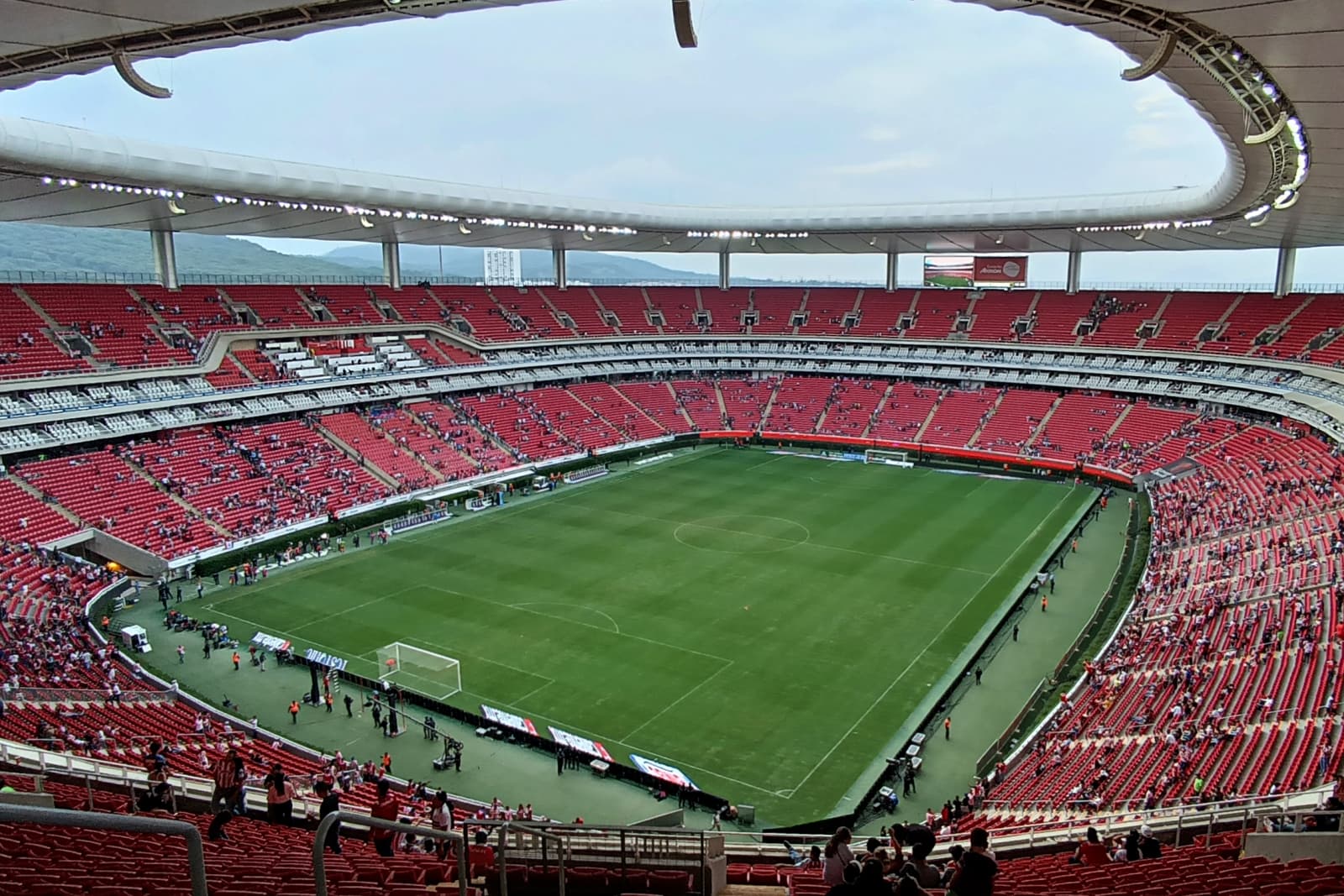
Estadio Akron is the home of Chivas de Guadalajara - the most symbolically Mexican club in Liga MX - and one of the most modern football-specific stadiums in Mexico. Built in 2010 at a cost of approximately $250 million USD, it sits at the western edge of Zapopan in the shadow of the Bosque La Primavera nature reserve, giving it a forested hillside backdrop that few urban Mexican venues can match.
During the 2026 World Cup it will be officially known as Estadio Guadalajara under FIFA naming requirements.
Key stadium facts:
- Capacity: approximately 48,000 for World Cup configuration
- Football-specific design - steeply raked stands, no athletics track, excellent sightlines
- Home of Chivas - the only Liga MX club to field exclusively Mexican nationals
- Located in Zapopan, approximately 12 kilometers west of the historic center
Getting there - Tren Ligero (Line 1) from the city center, or Uber from Centro (20–30 minutes, $5–8 USD). Do not drive on match days.
Arrive 90 minutes early minimum - The June 18 El Tri (Mexico) match will draw enormous crowds. Security will be thorough and the area will be packed well before kickoff.
Stadium weather - Evening matches will be warm and pleasant - around 70–75°F at kickoff. A light layer for the second half is worth having.
The 2026 World Cup Matches at Estadio Akron
Based on the official FIFA release schedule (January 29, 2026), Estadio Guadalajara will host 4 group stage matches spanning June 11–26 - a 15-day window ideal for a multi-match trip.
|
Match
|
Teams
|
Date
|
Time (CT)
|
Group
|
|
Match 9
|
South Korea vs. UEFA Playoff D Winner
|
Wednesday, June 11
|
9:00 PM
|
Group A
|
|
Match 28
|
Mexico vs. South Korea
|
Thursday, June 18
|
8:00 PM
|
Group A
|
|
Match 72
|
Colombia vs. Intercontinental Playoff 1 Winner
|
Tuesday, June 23
|
9:00 PM
|
Group K
|
|
Match 65
|
Uruguay vs. Spain
|
Friday, June 26
|
7:00 PM
|
Group H
|
The El Tri angle: Mexico vs. South Korea on June 18 is El Tri's crucial middle group match, played in one of the most passionate football cities in the country. The June 11 South Korea opener sets the stakes directly - that result shapes the atmosphere walking into June 18. The combination of national fanbase and Guadalajara's deep Chivas football culture will produce one of the great atmospheres of the Mexican phase.
The neutral's pick: Uruguay vs. Spain on June 26 is the standout match for any fan without a rooting interest - European champions against South American royalty. Both fan bases travel in force. The Spanish community in Guadalajara is historically significant. Expect a genuine atmospheric contest in the stands.
Where to Stay in Guadalajara for World Cup 2026
The colonial core - Cathedral, Hospicio Cabañas, the main plazas are all walkable. Beautiful for daytime exploration, high hotel density, reasonable prices.
Best for: First-time visitors, culture-focused travelers.
The most vibrant neighborhood in modern Guadalajara - café-lined streets, independent restaurants, the city's nightlife scene. Avenida Chapultepec is one of the best streets in the city.
Best for: Food and nightlife travelers, anyone wanting to experience contemporary Guadalajara.
More practical than characterful. Good for fans attending multiple matches who want simple match-day logistics.
Getting Around Guadalajara

Uber - Most reliable option. Safe, available everywhere, inexpensive ($5–8 for most tourist-zone trips).
Tren Ligero - Guadalajara's light rail, newer and cleaner than Mexico City's Metro. Recommended for matchday transit. Line 1 covers the main tourist corridors.
Walking - The historic center is highly walkable and flat. Colonia Americana and Chapultepec are also pedestrian-friendly. One of the more walkable major Mexican cities.
From the airport: GDL is Mexico's second-busiest international airport with direct flights from Los Angeles, Chicago, Dallas, Houston, New York, Las Vegas, and more. Uber to Centro takes 25–35 minutes ($10–15 USD). A new BRT public transport line (Line 5) will connect the airport to Estadio Akron.
Where to Eat in Guadalajara

Guadalajara's food culture is specific, invented here, and irreplaceable. The city didn't borrow its culinary identity - it created it.
Torta Ahogada - Non-Negotiable
A birote salado roll - a sourdough loaf unique to Guadalajara's climate and water - filled with carnitas and drowned in árbol chile sauce. Spicy, messy, and one of the most distinctive food experiences in Mexico. The bread cannot be replicated elsewhere.
- Tortas Toño - The most famous, multiple locations. The reference standard.
- La Chata - Historic center institution. Traditional Jalisco cooking - tortas ahogadas, pozole, carne en su jugo.
Birria
Jalisco is the birthplace of birria - slow-cooked meat in dried chiles and spices. The birria taco trend that swept the world originated here. Eating birria in Guadalajara is eating it at the source.
Carne en su Jugo
Another Guadalajara invention - thin-sliced beef simmered in its own juices with bacon, tomatillos, and white beans.
- Karne Garibaldi - Holds a Guinness World Record for fastest service. The food matches.
Mercado San Juan de Dios - The largest indoor market in Latin America - over 40,000 square meters across five floors, thousands of vendors, and mouthwatering prepared food. Go for breakfast or lunch.
Tequila and Mezcal You are an hour from the source. Tequila costs a fraction of what it does anywhere else. Restaurants carry extensive agave spirits menus at prices that feel implausible by US standards.
Where to Drink and Watch Games
Colonia Americana / Avenida Chapultepec - The nightlife spine. Bar after bar, active until 3am on weekends. The World Cup energy will be concentrated here.
- Cantina La Fuerza - Historic center, the rusted bike above the bar (someone rode it in the 1950s, got too drunk to ride home, and left it), the authentic Guadalajara cantina experience
- Plaza de los Mariachis - Adjacent to Mercado Libertad. Mariachi musicians gather here to be hired. On weekend evenings the plaza fills with competing music. During World Cup week with matches showing nearby - this is an experience that exists nowhere else on the host city list.
Best Tours and Experiences in Guadalajara
60 km northwest, 1 hour by car or 2.5 hours on the Jose Cuervo Express. UNESCO agave landscape. Distillery tours. The source. Book ahead for the train.
UNESCO World Heritage Site. The Orozco murals - particularly the Man of Fire ceiling fresco - are masterworks of 20th-century art.
The arts and crafts district absorbed into the metro. Handmade glass, ceramics, silver, textiles. El Parian - a ring of restaurants with continuous mariachi - is one of the great courtyard experiences in Mexico.
Mexico's largest lake, 45 minutes south. Colonial lakeside towns (Ajijic, Chapala), a large expat community, and a serene counterpoint to city energy.
Beyond the Game - Guadalajara in June

Cathedral and Historic Center - The twin-spired cathedral has dominated the skyline since the 16th century. The Palacio de Gobierno houses Diego Rivera murals. The Rotonda de los Hombres Ilustres is one of the finest public monuments in Mexico. Walk it slowly.
Instituto Cultural Cabañas - See above. The Orozco murals. Go.
Mercado Libertad - The largest traditional market in Mexico. Overwhelming and extraordinary.
Day Trips:
- Tequila - 1 hour. Must visit.
- Lake Chapala / Ajijic - 45 minutes. Mexico's largest lake, beautiful lakeside towns.
- Mazamitla - 2 hours. Mountain town in pine forests, cool air, artisan cheese.
- Puerto Vallarta - 5 hours by road, 1 hour by plane. The Pacific coast - worth it as a post-World Cup extension.
Guadalajara Fan Culture
Guadalajara is a football city in the deepest sense. Chivas carry a fanbase that treats the club as an expression of national and regional pride simultaneously - and their all-Mexican roster policy turns every match into a symbolic debate about identity, talent development, and what it means to represent Mexico.
The Estadio Akron atmosphere for home matches is among the loudest in Mexican football. For El Tri's June 18 match, that same energy floods a stadium wearing national colors.
The June 26 Uruguay vs. Spain match will bring significant traveling support from both nations - Spain's historical community in Guadalajara is large and vocal, Uruguayan fans are among the most organized World Cup travelers in South America.
Outside the stadium, the Plaza de los Mariachis with matches on screen, the cantinas, the tequila - Guadalajara will celebrate the World Cup the way it does everything: with music, food, and no particular concern about what time it is.
Who Should Choose Guadalajara?
- El Tri supporters - Mexico's June 18 match is here. The atmosphere will be extraordinary.
- Spain and Uruguay supporters - June 26 is the headline neutral match of the Guadalajara schedule.
- Culture travelers - UNESCO murals, colonial architecture, the birthplace of tequila and mariachi.
- Food obsessives - Tortas ahogadas, birria at the source, carne en su jugo. The food identity is specific and irreplaceable.
- Anyone combining Mexican cities - Guadalajara is 1 hour by plane from Mexico City and 1.5 hours by plane from Monterrey
- The "most Mexican Mexico" seeker - "They invented tequila and mariachi; they are basically the Mexico of Mexico." Accurate.
Guadalajara World Cup Weather Guide
June averages:
- Highs: 84°F (29°C)
- Lows: 61°F (16°C)
- Rain: Brief afternoon showers, clearing quickly. Mornings are reliably clear.
- Altitude: 1,566 meters - slight effect, notably comfortable
Stadium conditions: Evening matches, warm and pleasant. Light layer for the second half. No extreme heat precautions needed.
Pack: Light daytime clothing, packable rain jacket, one warm layer for evenings, comfortable walking shoes for cobblestones.
See our complete FIFA World Cup 2026 Packing List for everything else.
Biggest Mistakes World Cup Visitors Make in Guadalajara
Not going to Tequila - A UNESCO site one hour away and you’ll have plenty of it during your World Cup adventures.
Skipping the Torta Ahogada - The defining food of the city. Order it at a street stall - it doesn't work in a tourist restaurant.
Missing the Hospicio Cabañas - The Orozco murals are world-class art. It's not a footnote attraction. Budget the morning.
Only staying in Centro - Guadalajara has many unique areas to explore, including Tlaquepaque and Zapopan (where Estadio Akron is located). .
Not going out at night - Guadalajara after dark - Avenida Chapultepec, Plaza de los Mariachis - is one of the great nightlife experiences in Mexico.
Assuming it's a smaller Mexico City - It's its own thing - more traditional, more specifically Jaliscan, the cultural source rather than the cultural capital. Engage with it on its own terms.
Conclusion
Every element of Mexican culture that the world recognizes - tequila, mariachi, colonial grandeur, the football passion that is simultaneously local and national - has its roots in Guadalajara or the state of Jalisco around it.
Some may say it’s where Mexican culture was invented–a living, breathing museum that instantly immerses visitors in the local heritage.
Be inside Estadio Akron when El Tri walks out on June 18.
Read More:
FIFA World Cup 2026 Packing List
What to Wear to a World Cup Game
Mexico City World Cup 2026 Guide: Everything You Need To Know
Guadalajara World Cup FAQ
Is Guadalajara safe for World Cup visitors?
In Centro, Chapultepec, Colonia Americana, and Zapopan - yes. Use Uber, stay in recommended neighborhoods, standard urban awareness. Security issues in outlying areas do not intersect with normal tourist movement.
How do I get to Estadio Akron?
Tren Ligero from the city center, or Uber (20–30 minutes, $5–8 USD). Don't drive on match days.
How far is Tequila town?
60 km northwest - 1 hour by car, 2.5 hours on the Jose Cuervo Express train. A full day trip.
What is the weather like in Guadalajara during the World Cup?
Among the best of any host city - 84°F days, 61°F evenings, brief afternoon rain. Evening matches will be warm and pleasant.
What is the must-eat food?
Torta ahogada, then birria, carne en su jugo, and tequila that costs less than you've ever paid for it.
What should I not miss?
Mexico vs. Korea at Estadio Akron, the Hospicio Cabañas murals, a torta ahogada, the town of Tequila, mariachi at Plaza de los Mariachis, and at least one night in Colonia Americana.