Every conversation about the 2026 World Cup starts with Mexico City and Guadalajara, but Monterrey has just entered the chat!. It’s a mountain town sitting just 100 miles from the Texas border that sets modern architecture against towering ridges.. The regio - the Monterrey demonym - is proud, blunt, hardworking, and famously individual. A city built for itself first and welcoming to all visitors.
What it has: a stadium carved into a mountain backdrop that produces one of the most visually dramatic World Cup match-day experiences in Mexico. Carne asada culture is so embedded in the city's identity that entire neighborhoods organize around Sunday cookouts. Barrio Antiguo - a historic neighborhood of cobblestone streets, live music, and bars that stay open until 4am. The Sierra Madre mountains are visible from almost everywhere, with world-class hiking and rock climbing within 30 minutes of the city center. And a food scene that punches well above its tourist profile.
Here is your Monterrey World Cup 2026 Guide:
Why Monterrey for World Cup 2026

Monterrey is Mexico's second-largest city and its industrial and financial capital - a metro area of over 5 million people built around manufacturing, steel, glass, beer, and business. San Pedro Garza García - the wealthiest municipality in Latin America by GDP per capita - functions as Monterrey's affluent western district. CEMEX, FEMSA (the world's largest Coca-Cola bottler, and parent of Corona, Tecate, and Heineken Mexico), and Grupo Bimbo all have roots here. The city generates more foreign investment than any other Mexican metro outside the capital.
The city sits in a valley ringed by the Sierra Madre Oriental - tall, dramatic limestone peaks forming an unbroken backdrop to the skyline in every direction. The Cerro de la Silla (Saddle Mountain) is the city's visual signature. The mountains are active recreation terrain with hundreds of hiking trails, rock climbing routes, and canyon systems accessible from the city limits.
Monterrey's international workforce has produced a restaurant scene shaped by the same globalized professional class that fills its hotels on weekday nights. The food skews toward meat - carne asada is the cultural touchstone, and the quality here is exceptional - but the dining range extends well beyond it.
The heat must be acknowledged honestly. Summer temperatures regularly reach 104–113°F (40–45°C). June during the World Cup will be genuinely hot. Plan accordingly: early mornings, evenings, air-conditioned interiors during peak afternoon heat, and Estadio BBVA matches that, thankfully, mostly run in the evening.
The Monterrey World Cup Strategy
- Stay in San Pedro Garza García or Centro - San Pedro is Monterrey's safest, most polished neighborhood - upscale hotels, excellent restaurants, international business infrastructure. Centro/Barrio Antiguo is the cultural heart, closer to the nightlife and historic areas.
- Use Uber everywhere - Monterrey's Metrorrey system is functional but limited in coverage. Uber is safe, inexpensive, and widely available. Street taxis are not recommended.
- Respect the heat - June temperatures regularly exceed 40°C (104°F). Don't plan walking tours at 2pm. Explore early morning and evenings. Hydrate constantly. Sunscreen is non-negotiable.
- Embrace carne asada culture - If you receive an invitation to an asada - a backyard BBQ cookout - accept immediately. This is how regios socialize, and experiencing it is worth more than any restaurant visit.
- Learn some Spanish - Monterrey has less tourist infrastructure than Mexico City. English is spoken in upscale hotels and restaurants but less reliably in general settings. Basic Spanish goes a long way.
- Give it time - Monterrey rewards patience. It doesn't open up immediately to visitors the way more tourist-oriented cities do. Spend a second day and the city starts to reveal itself.
Estadio BBVA - What to Know

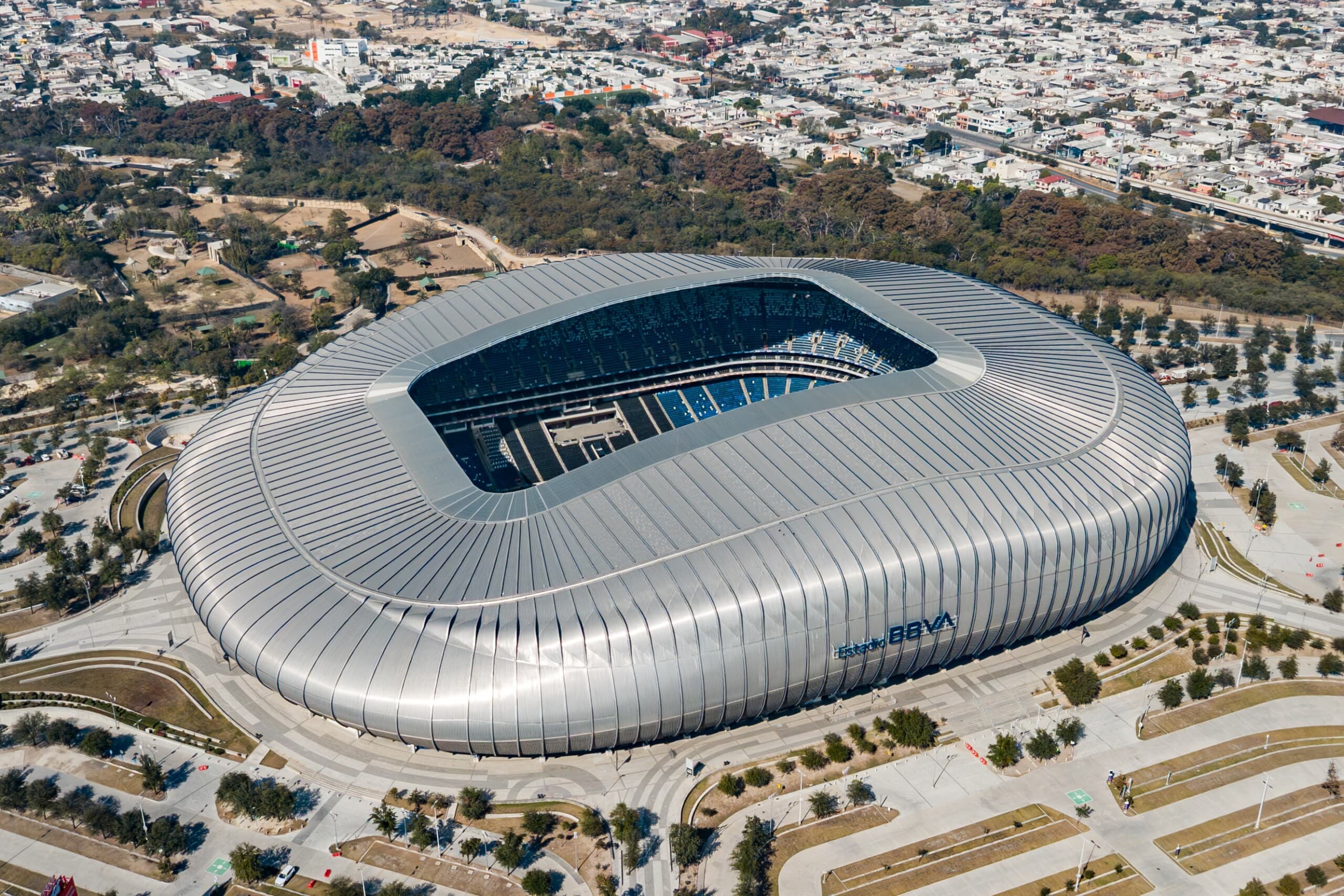
Estadio BBVA, aka El Gigante de Acero, is one of the most visually spectacular football stadiums in the Americas. Built in 2015 for Rayados (Club de Fútbol Monterrey) at a cost of over $200 million USD, it sits in the municipality of Guadalupe with the Sierra Madre mountains forming a direct backdrop to the open end of the stadium. On clear evenings, watching a match with those peaks framing the far goal is unlike any other stadium experience in the tournament.
During the 2026 World Cup it will be officially known as Estadio Monterrey under FIFA's neutrality naming requirements.
Key stadium facts:
- Capacity: 53,500 (expandable for FIFA events)
- Opened: 2015, considered one of the most modern and well-designed stadiums in Mexico
- The open-air design at the mountain-facing end creates the visual signature - the peaks are part of the stadium experience
- Home of Club Monterrey (Rayados) and hosts the Clásico Regio against Tigres - one of the fiercest derbies in Liga MX, regularly selling out all 53,500 seats with some of the loudest atmospheres in Mexican football
- Located in Guadalupe municipality, east of central Monterrey
Getting there - Metrorrey Line 1 to Exposición station, only a 10-minute walk to the stadium. Uber from San Pedro or Centro takes approximately 25–35 minutes depending on traffic. Driving is not recommended on match days - parking is limited and traffic post-match will be significant.
Arrive 90 minutes early minimum - World Cup security protocols are thorough. For evening matches - most of the schedule here - arriving early also gives you time to take in the mountain backdrop before the light fades completely.
Heat note - Even evening matches in June will be warm - expect 85–95°F at kickoff. Wear moisture-wicking clothing, bring a small water bottle if permitted, and pace yourself on stadium walks and ramps.
The 2026 World Cup Matches at Estadio BBVA
Based on the official FIFA release schedule (January 29, 2026), Estadio Monterrey will host 4 matches - 3 group stages and 1 Round of 32.
|
Match
|
Teams
|
Date
|
Time (CT)
|
Stage
|
|
Match 12
|
UEFA Playoff B Winner vs. Tunisia
|
Saturday, June 14
|
10:00 PM
|
Group F
|
|
Match 36
|
Tunisia vs. Japan
|
Friday, June 20
|
11:00 PM
|
Group F
|
|
Match 54
|
South Africa vs. South Korea
|
Wednesday, June 24
|
9:00 PM
|
Group A
|
|
Match 75
|
Group F Winner vs. Group C Runner-Up
|
Sunday, June 29
|
9:00 PM
|
Round of 32
|
Group F context: Tunisia, Japan, Netherlands, and the UEFA Playoff B Winner from Group F. Japan - one of the most technically accomplished teams in Asia, with a passionate global fanbase - plays here on June 20. The Clásico Tunisia-Japan match at Estadio BBVA has significant Group F implications. The Round of 32 on June 29 brings the Group F winner to Monterrey for their first knockout game.
Group A connection: South Africa vs. South Korea on June 24 has direct implications for Mexico's group stage qualification path - both teams are in Group A with El Tri. Mexico plays its Group A matches in Mexico City and Guadalajara, but Monterrey's June 24 result could shape El Tri's qualification path directly. Mexican fans will be watching this one closely regardless of where they're sitting.
Where to Stay in Monterrey for World Cup 2026
The safest, most polished area in the metro. Upscale hotels, excellent international restaurants, walkable commercial streets, and the highest concentration of English-speaking service staff in the city. The gap between San Pedro and the rest of Monterrey is significant - it functions more like a prosperous American suburb than a traditional Mexican neighborhood, which is either a positive or a negative depending on what you're looking for.
Best for: First-time visitors, luxury travelers, anyone prioritizing comfort and safety above all else.
The historic center of Monterrey. The Macroplaza (one of the largest public squares in Latin America), the Palacio de Gobierno, the Museo de Historia Mexicana, and directly adjacent: Barrio Antiguo - the cobblestone nightlife and restaurant district. Grittier than San Pedro, more authentically regio, better access to the city's cultural core.
Best for: Visitors who want nightlife access, cultural immersion, and the actual historical Monterrey experience.
Getting Around Monterrey

Uber - The clear best option for most visitors. Safe, inexpensive, available throughout the city. A 20-minute ride across the metro typically costs $3–6 USD. Use it for all significant movement.
Metrorrey - Monterrey's Metro system, two lines covering key corridors. Useful for specific routes (Line 1 connects central areas) but limited in overall coverage. Clean, safe, and inexpensive. For matchday transit to Estadio BBVA, Metrorrey is the recommended approach.
Walking - Viable in Centro/Barrio Antiguo and San Pedro's commercial areas. Not viable during midday heat in June - temperatures make extended outdoor walking genuinely dangerous. Explore on foot in early mornings and evenings.
From the airport - Monterrey's General Mariano Escobedo International Airport (MTY) is approximately 20–25 minutes from Centro by Uber. Taxis available from authorized booths inside the terminal.
Where to Eat in Monterrey

Monterrey's food identity is built on meat, and specifically on carne asada - grilled beef, usually arrachera (skirt steak), cooked over mesquite charcoal and served with handmade flour tortillas, guacamole, and salsa. It is the social ritual of the city. You will eat it multiple times and not feel the repetition.
Carne Asada - The Essential Experience
- El Rey del Cabrito - Downtown institution. Cabrito (roasted baby goat) is the other signature dish of Monterrey - slow-roasted over open flame, completely unlike anything you've had before. El Rey is the most famous address for it.
- La Catedral del Asado - San Pedro. Modern take on the asado tradition, premium cuts, excellent wine list.
- Asadero Regio - Multiple locations. The neighborhood asadero experience - smoke, noise, communal tables, enormous portions. This is what carne asada culture actually looks like.
Barrio Antiguo Dining
- El Tío - Barrio Antiguo. Northern Mexican cooking, historic space, one of the most beloved restaurants in the city.
- Pangea - San Pedro. Nuevo León fine dining, Michelin-starred, multiple Latin America's 50 Best appearances, the flagship of Monterrey's upscale restaurant scene. Reserve ahead.
- Jabalina - Barrio Antiguo. Features dishes crafted with local ingredients and traditional gastronomy.
Tacos and Street Food
- Taquería Los Generales - Centro. Buffet-style eatery with northern-style tacos - flour tortilla, grilled meat, simple, perfect.
- Mercado Juárez - Central market, freshest produce and prepared foods, the place to eat breakfast like a local.
The Beer
Monterrey is the home of FEMSA - the conglomerate that produces Corona, Tecate, Carta Blanca, and Bohemia. Craft beer has also arrived strongly in the past decade. Carta Blanca on draft in a cantina in Barrio Antiguo is the correct local drinking experience.
Where to Drink and Watch Games in Monterrey
Barrio Antiguo - The concentrated nightlife district - cobblestone streets, live music bars, cantinas, and clubs operating Sunday through Sunday. The energy here during World Cup 2026 will be significant. Key streets: Padre Mier, Morelos, and Abasolo.
- La Tumba - Barrio Antiguo. Local institution, live music, cold beer, the authentic Monterrey bar experience.
- Café Iguana - Barrio Antiguo. The most famous bar in the neighborhood, live music, two floors, open late.
- Almacén 42 - Barrio Antiguo. Mezcal and cocktail bar in a converted warehouse, one of the better drink programs in the city.
San Pedro Bars - More polished, slightly less character, but reliable and safe late-night options for visitors staying in the area.
Barrio Antiguo - The concentrated nightlife district - cobblestone streets, live music bars, cantinas, and clubs operating Sunday through Sunday. The energy here during World Cup 2026 will be significant. Key streets: Padre Mier, Morelos, and Abasolo.
- La Tumba - Barrio Antiguo. Local institution, live music, cold beer, the authentic Monterrey bar experience.
- Café Iguana - Barrio Antiguo. The most famous bar in the neighborhood, live music, two floors, open late.
- Almacén 42 - Barrio Antiguo. Mezcal and cocktail bar in a converted warehouse, one of the better drink programs in the city.
San Pedro Bars - More polished, slightly less character, but reliable and safe late-night options for visitors staying in the area.
Fan Zones - Fundidora Park - a massive urban park built in a converted steel mill - will host the official FIFA Fan Festival for Monterrey. Live match screenings, concerts, and cultural programming in one of the most architecturally striking public spaces in Mexico. The rusting industrial infrastructure of the original foundry forms the backdrop to the festival grounds. Free entry.
Best Tours and Experiences in Monterrey
30 minutes southwest of the city center. One of the most dramatic canyon landscapes in North America - vertical limestone walls rising 1,000+ feet, a river at the bottom, and world-class rock climbing routes that draw climbers from across the continent. The hike into the canyon floor is accessible for most fitness levels. This is the single best day trip from any of the three Mexican World Cup host cities.
A protected nature reserve on the edge of the city - part of the Sierra Madre system - with dozens of hiking trails ranging from easy forest walks to serious mountain climbs. Views over the entire Monterrey basin from the upper trails. Accessible by Uber from San Pedro in 15 minutes.
The mountain that defines Monterrey's skyline - shaped like a saddle, visible from almost everywhere in the city. The summit hike is serious (bring a guide, start early, bring water) but the views from the top over the entire metro are unmatched.
Beyond the Game - Monterrey in June

Macroplaza - One of the largest public squares in Latin America - 100 acres in the heart of the city. The Palacio de Gobierno, the Metropolitan Cathedral, the Lighthouse of Commerce (a striking modernist beacon that shoots a laser beam across the city at night). A good orientation point for the city center.
Museo de Historia Mexicana - On the Macroplaza. Three floors covering Mexican history from pre-Columbian civilizations through the present. Well-curated, bilingual exhibits, one of the better regional history museums in the country.
MARCO (Museo de Arte Contemporáneo de Monterrey) - Contemporary art museum adjacent to the Macroplaza. Strong permanent collection and rotating exhibitions. The building - by Ricardo Legorreta - is architecturally significant in its own right.
Obispado Hill - A hill above the Centro with a colonial-era bishop's palace (now a regional history museum) and panoramic views over the entire city and the mountains beyond. Go at sunset.
Day Trips:
- La Huasteca Canyon - 30 minutes, see above. Do not miss.
- Cascada Cola de Caballo (Horse Tail Falls) - 45 minutes south. A 75-meter waterfall in the mountains. Accessible family day trip.
- Saltillo - 90 minutes southwest. The capital of Coahuila state, known for sarape textiles, a charming centro histórico, and significantly cooler temperatures than Monterrey in summer.
Monterrey Fan Culture
Monterrey lives and breathes football - but in a way that is specifically and definitely regio. The Clásico Regio between local rivals Rayados (Estadio BBVA) and Tigres (Estadio Universitario) is one of the most intense derbies in Latin American football. The city is divided cleanly between the two clubs. You will be asked which side you're on. Having an answer - either one - will earn immediate respect.
The international business community in Monterrey means the city already has significant numbers of Japanese, Korean, European, and American residents who will add cosmopolitan energy to the fan atmosphere around World Cup matches. The June 20 Tunisia vs. Japan match in particular will draw organized Japanese fan contingents traveling from across North America.
The proximity to Texas means a meaningful crossover of US-based fans - particularly from San Antonio, Houston, Dallas, and Austin - who can drive to Monterrey for matches relatively easily. Expect the fan composition at Estadio BBVA to be more mixed than any other Mexican host city.
Who Should Choose Monterrey?
- Outdoor and adventure travelers - La Huasteca Ecological Park, Chipinque National Reserve, Cerro de la Silla. No other host city puts world-class mountain terrain this close to the stadium.
- Meat enthusiasts - Carne asada and cabrito at the source. The beef culture here is not replicated anywhere on the host city list.
- Fans combining US and Mexico cities - Monterrey is 3 hours from Laredo, 4 from San Antonio, 4.5 from Monterrey to Houston. It's the most accessible Mexican host city from US soil.
- Budget-conscious travelers - Significantly more affordable than San Pedro's luxury tier suggests. Street food, local restaurants, and budget accommodation offer outstanding value.
- Travelers who want somewhere different - Monterrey is not on the standard tourist circuit. The visitors who come for the World Cup and actually spend time in the city will have an experience that differs sharply from the rest of the tournament.
- Japan and Tunisia supporters - Two Group F matches are here, including the head-to-head.
An Honest Note on Monterrey
Monterrey’s tourism infrastructure is thin by Mexican standards. English is less common than other Mexico World Cup host cities, Mexico City and Guadalajara. The heat in summer is genuinely extreme. The traffic is some of the worst in the country.
Despite its lack of tourism exposure, its international presence still makes the locals warm with foreigners, the food is excellent, the mountains are world-class, and visitors who arrive with an open mind find a city with a lot going on beneath the surface.
The World Cup is the best reason Monterrey has ever had to welcome international visitors. The city is preparing for it - infrastructure investment, metro expansion, Fan Festival at Fundidora Park. Use it as your entry point. You'll leave having seen a side of Mexico that most tourists never experience.
Monterrey World Cup Weather Guide
June in Monterrey:
- Highs: 100–113°F (38–45°C) - genuinely, significantly hot. This is not coastal warmth. This is dry, intense heat.
- Lows: 75–80°F (24–27°C) - warm even at night
- Afternoon thunderstorms: possible, sometimes dramatic, usually brief
- Humidity: moderate, rising with afternoon storms
What this means practically: Morning and evening are the windows for outdoor activity. Midday is for air-conditioned interiors. Evening matches at the stadium will be warm but manageable with moisture-wicking clothing and hydration. Day matches will be genuinely demanding - prepare accordingly.
What to pack for Monterrey specifically:
- Lightweight, moisture-wicking clothing for everything
- Sunscreen - high SPF, applied frequently
- Hat with full coverage
- A packable rain layer for afternoon storms
- Comfortable walking shoes (cobblestones in Barrio Antiguo)
See our complete FIFA World Cup 2026 Packing List for everything else.
Biggest Mistakes World Cup Visitors Make in Monterrey
Underestimating the heat - 100°F+ weather is no exaggeration. Plan every outdoor activity for early morning or evening. Carry water constantly. Don't be the person trying to walk uphill to a viewpoint at 2pm in June.
Skipping the carne asada - The restaurant list will tempt you with international options. Eat those too. But the carne asada - specifically at a local asadero with mesquite smoke and handmade tortillas - is the defining culinary experience of the city and not optional.
Not going to La Huasteca - It is 30 minutes from the city. It is among the most dramatic canyon landscapes in North America. There is no good reason to skip it.
Staying only in San Pedro - San Pedro is comfortable and safe. Barrio Antiguo and Centro are where the city's soul is. Take an Uber, spend an evening there, eat tacos at 1am. The contrast makes both areas more interesting.
Taking street taxis - Uber only. This is universally recommended by every source - locals, expats, travelers.
Conclusion
Monterrey doesn't make it easy. The heat will test you. The tourist infrastructure is thin. The city doesn't perform for visitors the way more cosmopolitan hosts do.
What it offers instead is something rarer on a World Cup tour: a proud, self-sufficient Mexican city that rewards the effort to understand it on its own terms. Just make sure you’re inside Estadio BBVA when the sun drops behind the Sierra Madre and the city’s real magic begins.
Read More:
FIFA World Cup 2026 Packing List
What to Wear to a World Cup Game
Guadalajara World Cup 2026 Guide: Everything You Need To Know
Monterrey World Cup FAQ
Is Monterrey safe for World Cup visitors?
In the tourist areas - San Pedro Garza García, Barrio Antiguo, Centro, and hotel districts - yes. Use Uber rather than street taxis, stay in the recommended neighborhoods, and exercise standard urban awareness. Security issues in outlying areas do not intersect with normal tourist movement between San Pedro, Centro, Estadio BBVA, and Fundidora.
How do I get to Estadio BBVA?
Metrorrey Line 1 to Exposición station is within walking distance, or Uber from central Monterrey (25–35 minutes). Do not drive on match days.
How far is Monterrey from Texas?
Approximately 145 miles (230 km) from Laredo, TX - about 2.5 hours by car. About 4 hours from San Antonio, 4.5 hours from Houston. It’s the most accessible Mexican host city from the US.
Do I need to speak Spanish in Monterrey?
More than in Mexico City's tourist zones. English is spoken in San Pedro hotels and upscale restaurants, less reliably elsewhere. Basic Spanish is strongly recommended.
What is the weather like in Monterrey during the World Cup?
Extremely hot. Expect 100–113°F (38–45°C) during the day, with warm evenings. Evening matches are manageable; midday outdoor activity is not recommended. Hydrate constantly.
What should I not miss in Monterrey?
La Huasteca Canyon, carne asada at a local asadero, Fundidora Park Fan Festival, Barrio Antiguo at night, cabrito at El Rey del Cabrito, and the mountain views from anywhere in the city.
What currency is used in Monterrey?
Mexican pesos (MXN). USD is accepted in some tourist-facing establishments in San Pedro but you'll get better rates using pesos. Use ATMs inside banks or hotels.